Every jobsite has routes that see more traffic than others.
Entrances, corridors, access points, and pathways between work areas can see hundreds of trips every day from workers with carts, tools, and other equipment; add changing weather conditions, from mud to dirt, water to snow, and even everyday construction debris, and these high-traffic areas can quickly become some of the hardest parts of a site to keep clean and protected.
That makes temporary walkway protection about more than simply covering the floor. The right setup can help control what enters the site, contain dirt and debris, protect finished surfaces, and create clearly defined routes for traffic throughout the project.
The Problem Starts Before You Step Inside
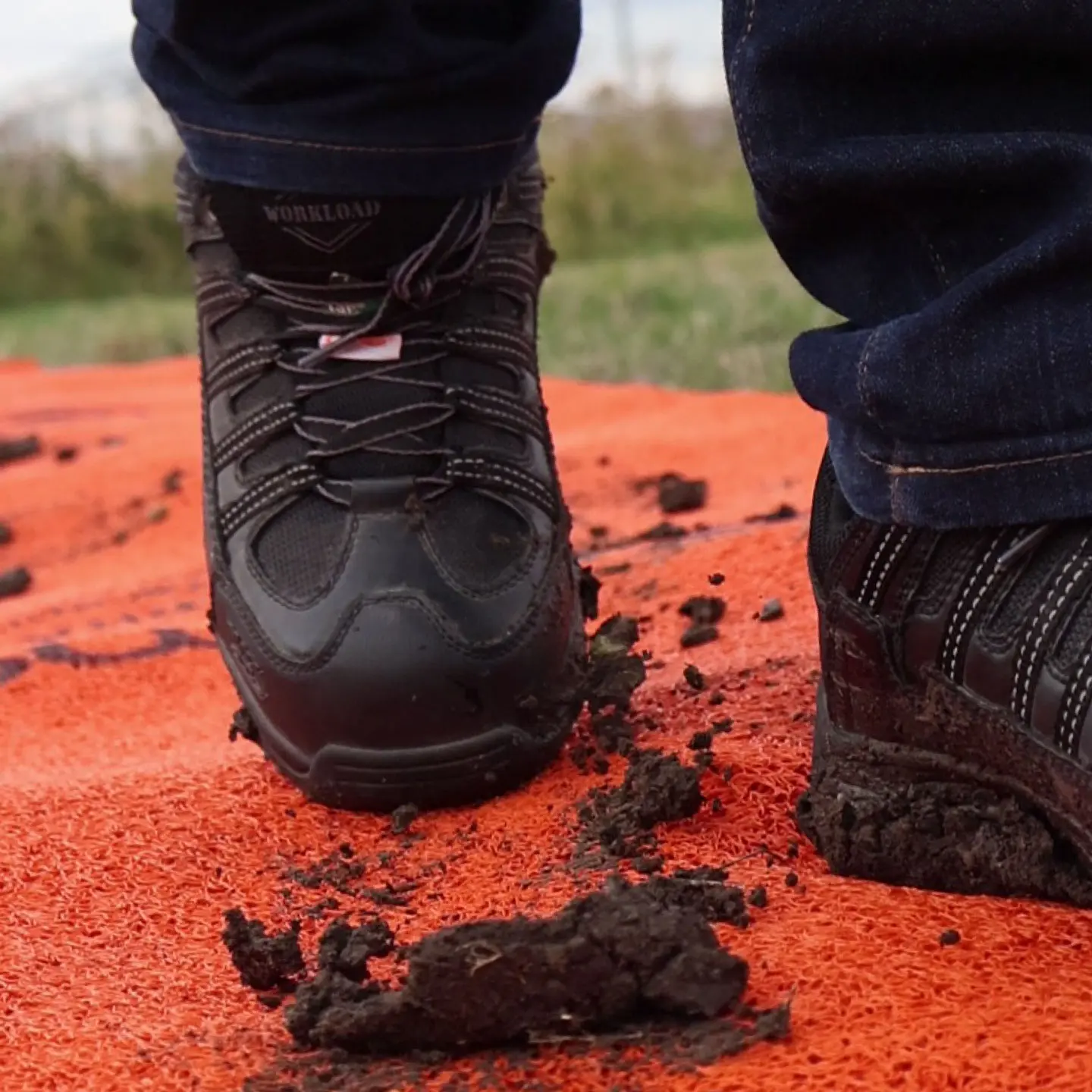
Many walkway problems begin outside the building.
Rain can turn surrounding soil into mud. Snow and slush can be tracked through entrances during colder months. Even in warmer, drier conditions, dirt, sand, and dust can collect on footwear and equipment before being carried inside.
Once that material enters the building, every step can carry it further.
A heavily travelled entrance can quickly become a pathway for dirt and moisture to spread into corridors, finished rooms, and other areas of the project. That creates more cleaning while potentially exposing finished surfaces to unnecessary wear and damage.
Stopping that cycle starts at the entrance.
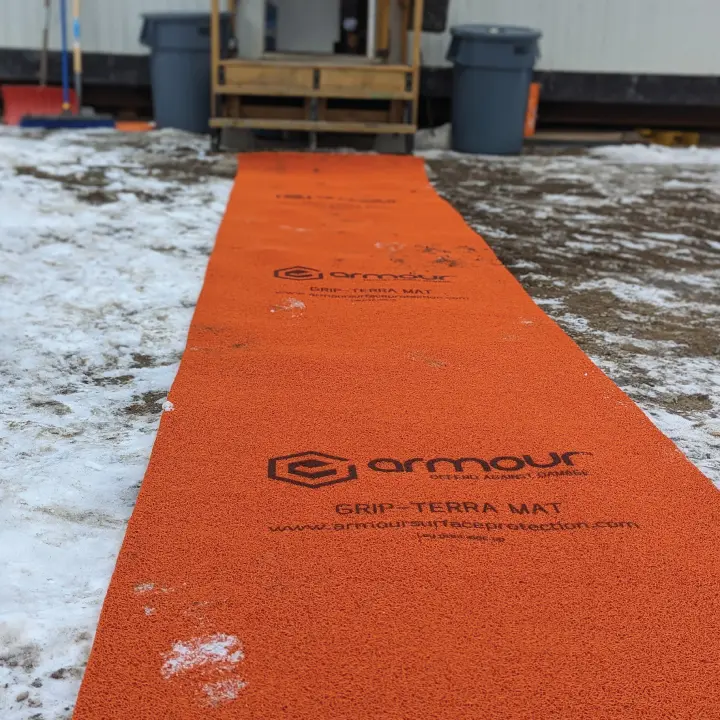
Heavy-duty solutions such as Armour Grip-Terra Mat can be used to create temporary exterior walkways and access routes in muddy, wet, or dirty conditions. Its permeable rubber construction allows water and dirt to pass through while providing excellent grip underfoot.
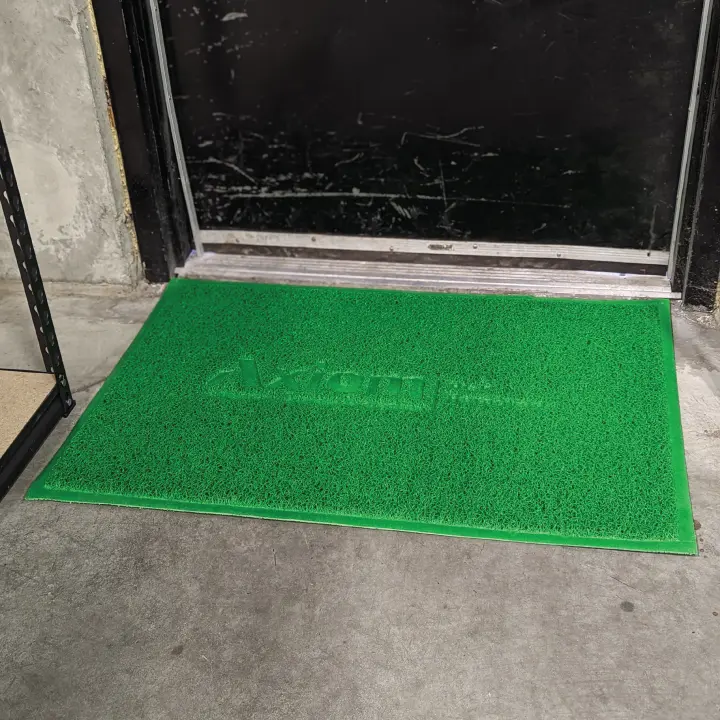
As traffic reaches the building, an Axiom Entry Mat can provide another point of defense, helping capture dirt and debris before it travels further into the site.
Together, these solutions help address the problem where it begins rather than dealing with the mess once it has already spread.
Keep A Clean Jobsite Cleaner
Site cleanliness isn't just about how a project looks.
A clean, organized jobsite is easier to move through, easier to maintain, and better prepared as completed areas begin to transition toward turnover. When mud, dust, and construction debris are continually tracked through finished spaces, crews can spend valuable time cleaning the same areas again and again.
Temporary access routes help control that traffic.
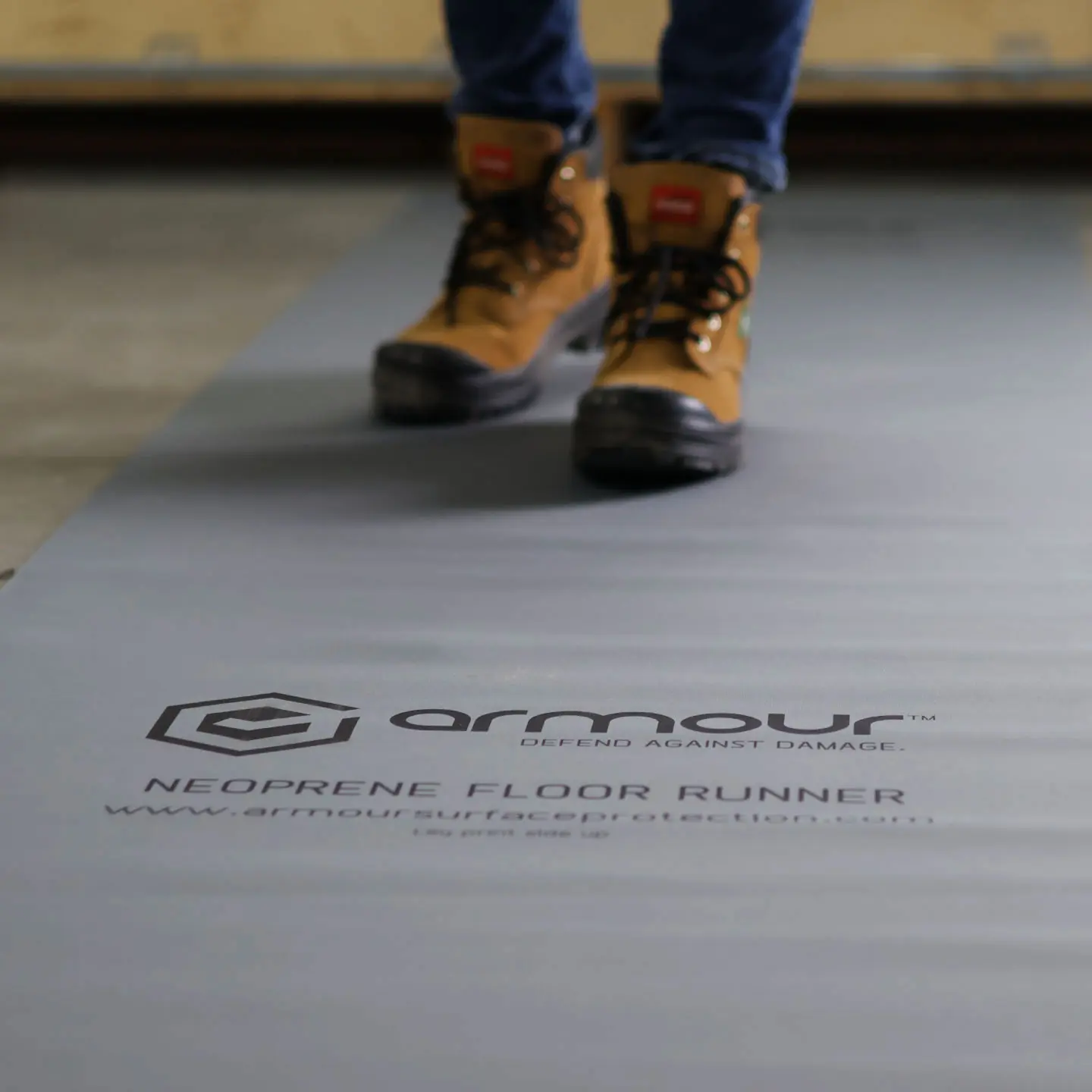
Once workers move indoors, Armour Neoprene Floor Runner can be used to create defined pathways across finished surfaces. Instead of allowing traffic to spread across an entire floor, a designated route helps concentrate movement onto an area that has been specifically protected for it.
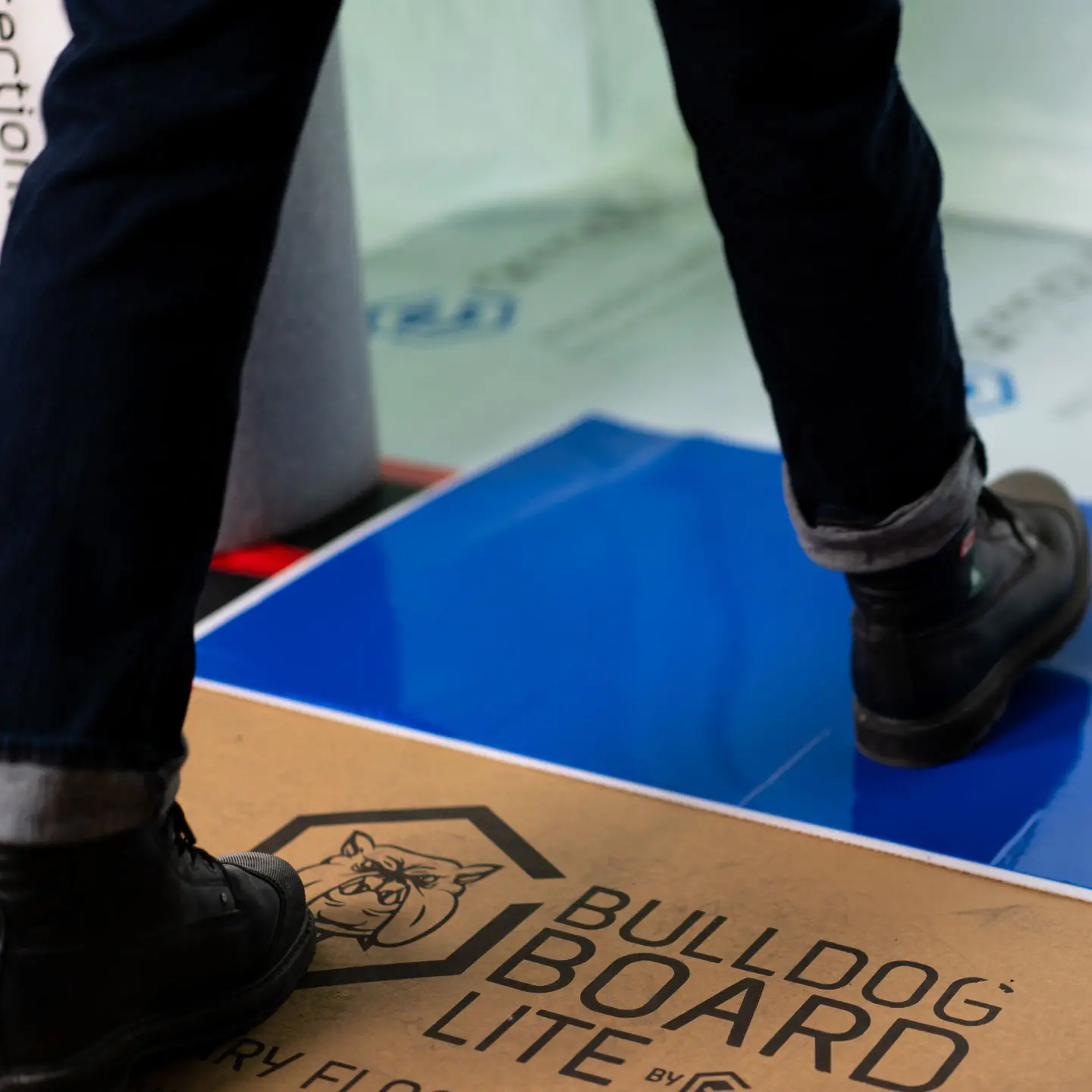
At transitions into cleaner or more sensitive spaces, Armour Tak-Mat Pads can help capture dust and fine particles from footwear and equipment wheels before they travel further.
Rather than treating each dirty area individually, this creates a system for controlling debris as people move through the project.
Protect What's Underneath The Traffic
Even when dirt and moisture are under control, repeated traffic creates another challenge.
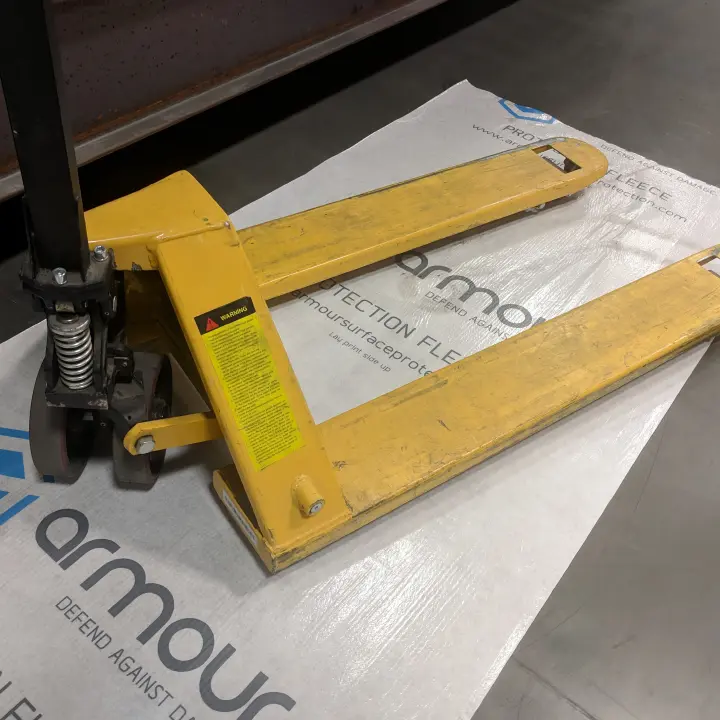
Finished flooring may still need to withstand workers moving back and forth throughout the day, carts carrying materials, tools being transported between areas, and the everyday impacts that come with an active construction environment.
That's where the temporary walkway itself becomes part of the surface protection plan.
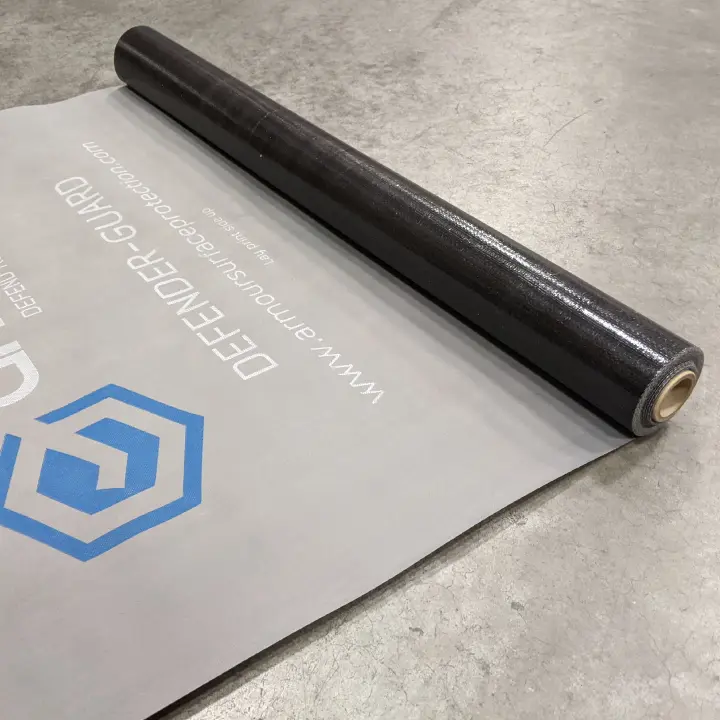
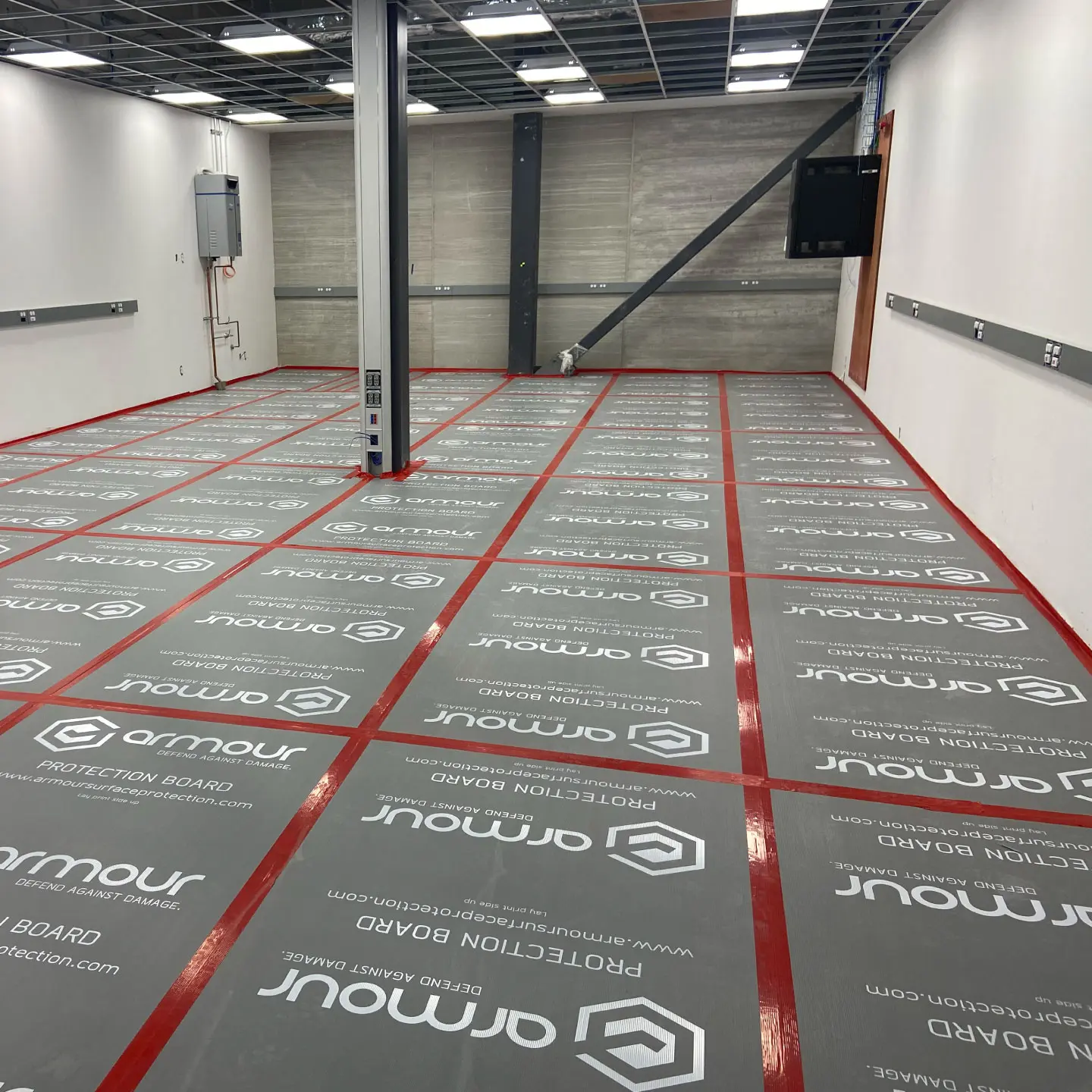
Depending on the surface, level of traffic, and potential for impact, temporary routes can incorporate products such as Armour Neoprene Floor Runner, Armour Protection Fleece, Armour Defender-Guard, or Armour Protection Boards to create a protective layer between jobsite activity and the finished surface below.
The protection can also change as the route changes.
A muddy exterior access point doesn't face the same risks as a finished interior corridor, so it doesn't always make sense to use the same protection from one end of the route to the other. Using different solutions at key points allows the protection to match the conditions.
One Route, Multiple Layers of Protection
The most effective temporary walkway doesn't necessarily rely on a single product.
Think about the full journey through the jobsite.
Workers might begin on an exterior Armour Grip-Terra Mat that helps control mud and water, cross an Axiom Entry Mat as they enter the building, follow an Armour Neoprene Floor Runner through a finished corridor, and step across an Armour Tak-Mat Pad before entering a cleaner work area.
For routes exposed to heavier traffic or greater impact, additional floor protection can be installed underneath or along the pathway.
Each layer addresses a different problem, but they all work toward the same goal: keeping jobsite traffic moving while helping keep the surrounding site clean and finished surfaces protected.
Conclusion: Start Protecting at the Entrance
Temporary walkways and access routes are used constantly, which means small problems can spread quickly when they aren't properly managed.
Mud at the entrance becomes mud down the hallway, dust from one work area reaches a finished space, and repeated foot traffic turns into unnecessary wear on a completed floor.
A well-planned access route helps stop those problems before they spread.
By controlling dirt and moisture at the entrance, defining protected pathways through high-traffic areas, and adding additional protection where conditions demand it, you can create a cleaner, more organized jobsite while helping protect the finished surfaces underneath.
Need help building the right temporary walkway for your jobsite?
Talk to the Axiom team about the conditions you're dealing with, or try our temporary surface protection solutions onsite with a FREE Axiom Sample Box.
- Phone: 1-866-617-8502
- Email: sales@axiomtsp.com
- Get a Quote: Request a Quote
Order Free Samples: Request Samples
Have A Topic You'd Like Us To Cover?